
Leadership Behaviors That Build Stronger, More Consistent Teams

Leadership is mobilizing and recruiting others to achieve a shared goal. At its heart, it’s about engagement. Even modern programs that teach leaders to be relational still focus on optimizing the individual leader and their leadership traits. But list your three favorite leaders, whether you know them personally or they’re famous figures from history, and notice that each has a different set of personality traits. There is no single set of leadership qualities. What your favorite leaders share isn’t a personality. It’s a connection you feel with them. So if the goal is connection with your audience, what competencies get you there?
Here’s our premise at Connection Lab: leadership isn’t something you possess or perform. It isn’t a title or a promotion. It’s something your audience grants when they feel connected to you and choose to follow you.
The payoff is worth it. Good leadership helps you fulfill your potential and helps your team fulfill theirs. When people choose to follow you, you harness the talent in the room. You collaborate and co-create, and you gather the insights, perspectives and worldviews that lead to better practices and better decisions. You build stronger, more consistent teams.
Where leadership competencies start: the 6 Box Model
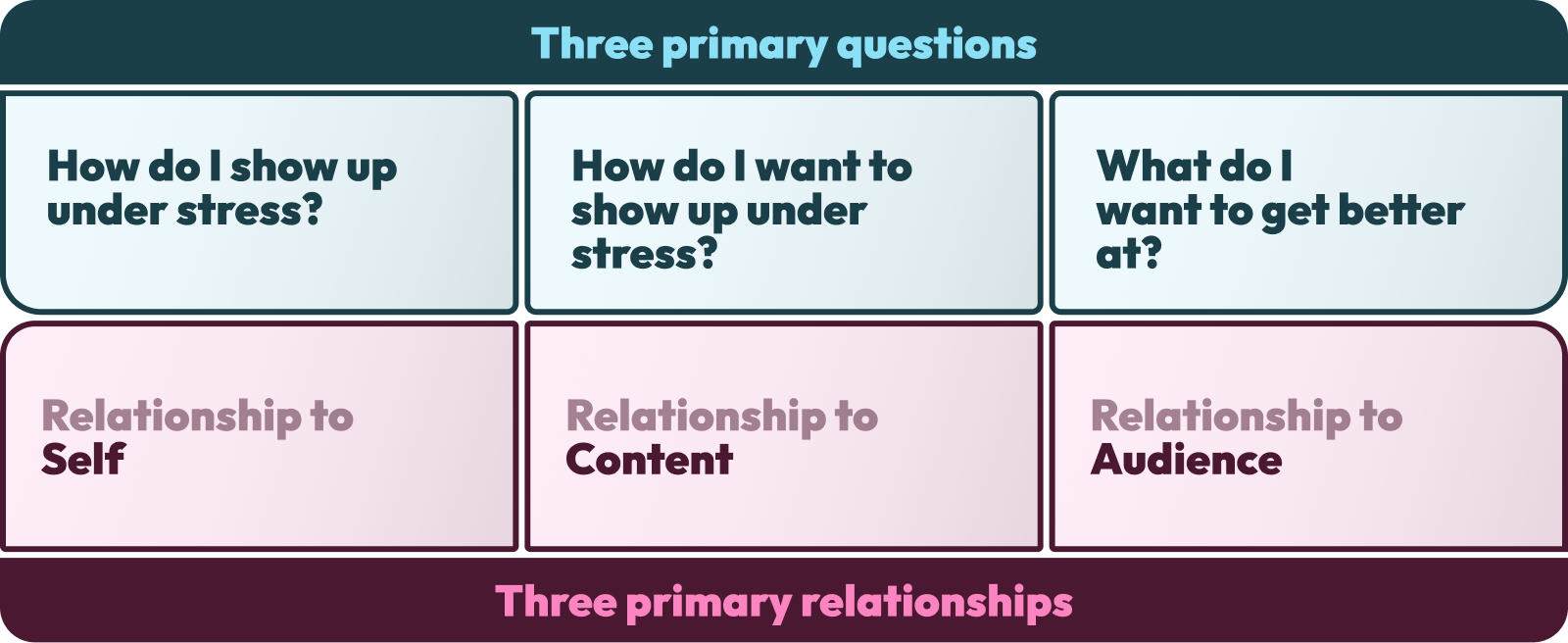
Our 6 Box Model™ breaks every act of leadership into three primary relationships: to Self, to Content and to Audience. It examines each through three questions: How do I show up under stress? How do I want to show up under stress? What do I want to get better at?
You probably know how to care for yourself, and you’re already strong in your content. That’s how you got your leadership role. The elusive relationship is your relationship to Audience. Connection Lab workshops and coaching programs focus on this relationship and the competencies you can practice to get better a t it.
Six leadership competencies you can practice to engage your audience and build stronger teams
Hard conversations, difficult clients, leading change, staying resilient under pressure: in these moments, all the traditional leadership traits and skills suddenly become elusive. Under stress, which of your skills and abilities disappear first? Take a breath now. Just thinking about it is stressful. Can you notice without judgment or correction? It’s not good or bad. It’s just interesting.
Prioritize relationship. When you’re confronted with a difficult leadership moment, focus on the person, the group or the team, through curiosity. That’s where the six competencies below begin.
1. Connect through curiosity
Competency: Connection
Be curious about the people you lead. Who are they? Are you curious about them or judgmental? Do they feel seen and heard by you? Do they feel necessary? Do they feel invited to co-create? How do you know? Ask them.
When your audience feels seen, heard, necessary and invited, they follow.
2. Honor your audience’s autonomy
Competency: Autonomy within community
Your team, clients and community decide whether you’re a leader. You can contribute to their experience of you, but you can’t control it. A team is a community of autonomous individuals. If you don’t let people decide whether your request has value to them, you deny them their autonomy.
Honoring that autonomy is an essential part of the leader-follower relationship.
3. Make a clear offer and invitation
Competency: Offer and invitation
If your audience can say no, what are you responsible for? Your offer and your invitation. Prioritizing your connection to your audience isn’t about controlling their experience of you. It’s about making a clear offer, extending a real invitation, and letting your audience decide whether it has value to them.
4. Clarify what you’re in service of
Competency: Service
Know the purpose behind your request, and don’t assume it’s obvious. Sometimes what you say you’re in service of isn’t what you’re really in service of. “Higher efficiency” can be a euphemism for upcoming layoffs. You may think your audience doesn’t know, but they usually do, and hiding the truth is a fast way to lose trust.
Here’s where I get into trouble. I tell myself I’m in service of my audience when really I’m in service of my own needs. Know the difference and be transparent. You and the business are allowed to have needs.
5. Give a clear call to action
Competency: Call to action
When your audience feels seen and heard and is ready to follow, they need to know what you want them to do. Say it plainly, and use action verbs.
When you’re connected with your audience, demand becomes a trust-building exercise rather than a trust-diminishing one.
6. Build a feedback practice
Competency: Feedback
Ask yourself: What is my feedback practice? Do I have one? And what is it in service of? Yes, feedback can be hard to hear. But it’s the only way to know whether your audience feels seen and heard, so ask them.
One question we like: “What do you want more of, or less of, from me?” Staying open to feedback shows you meant the invitation.
The goal: create other leaders
All of these competencies serve team engagement and collaboration. You don’t need to perform or develop “leadership” qualities. An introvert doesn’t need to become an extrovert. Prioritize your connection to the people you lead, and they will choose to follow you.
Practice consistently, and invite your team to help you. People will mimic you, and a shared language and methodology build stronger, more consistent teams. The ultimate goal is to inspire others to become leaders, just as your three favorite leaders inspired you.
What’s the best thing that could happen in your leadership journey? Join a Connection Lab half-day experiential workshop or coaching program. You’ll learn the 6 Box Model, practice your relationship to Audience, and build the ability to earn the followership that makes you a leader.