Welcome to our resource library
Here you'll find everything from videos and updates to reference and marketing materials. Sharing opportunities and knowledge with everyone is central to our mission — is there anything you'd like to see more or less of?
Contact us here →
Check out our toolbox

Lab Notes
Deep dive conversations (60-90 minutes) with past workshop participants. Real stories about what changed, and what’s still hard:
Learning: What do you want to get better at?
Permission: Practicing the six-box model
Soften: The relationship between business and breathing



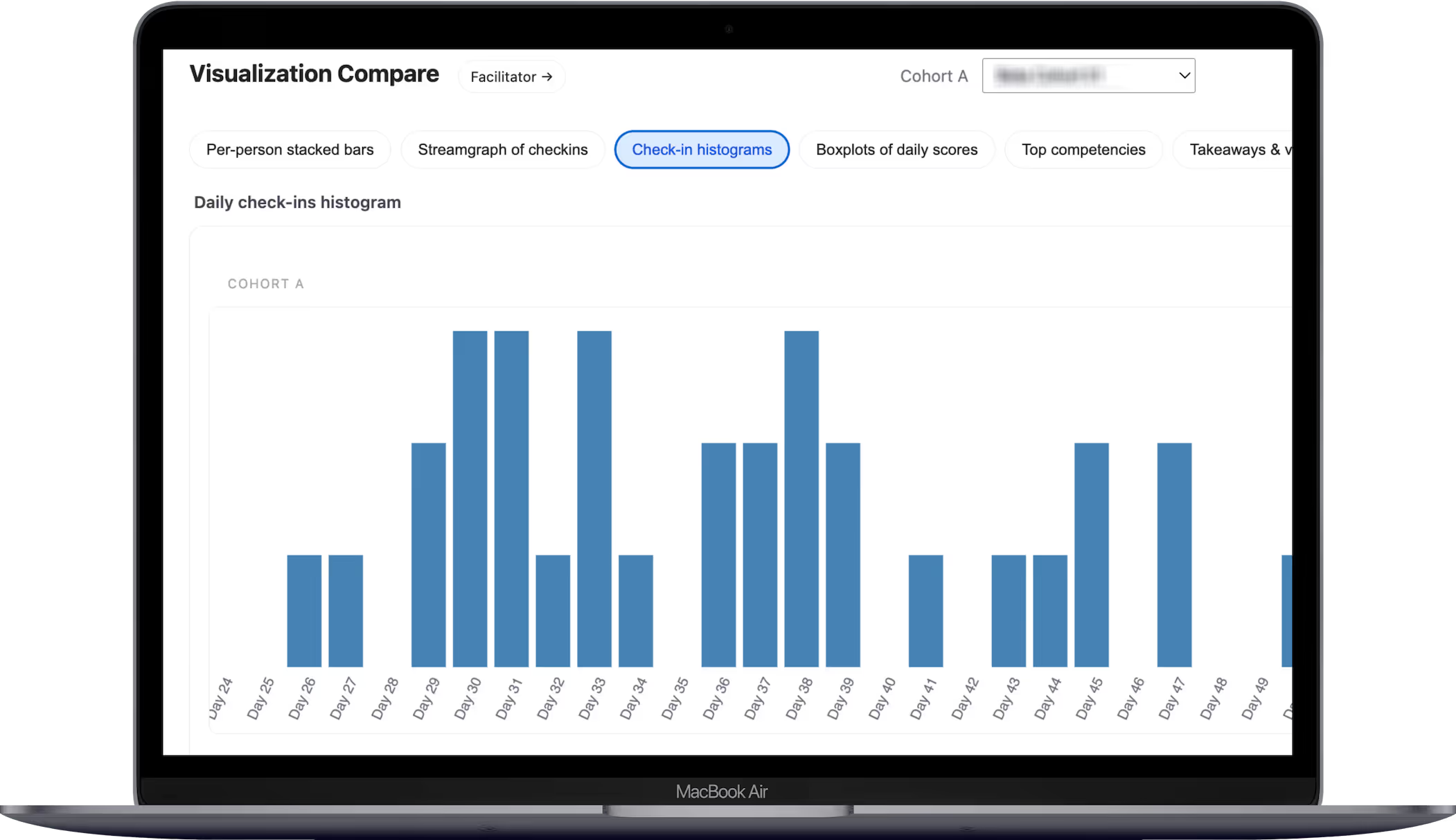
Lab Pass
See your progress. Practice what matters.




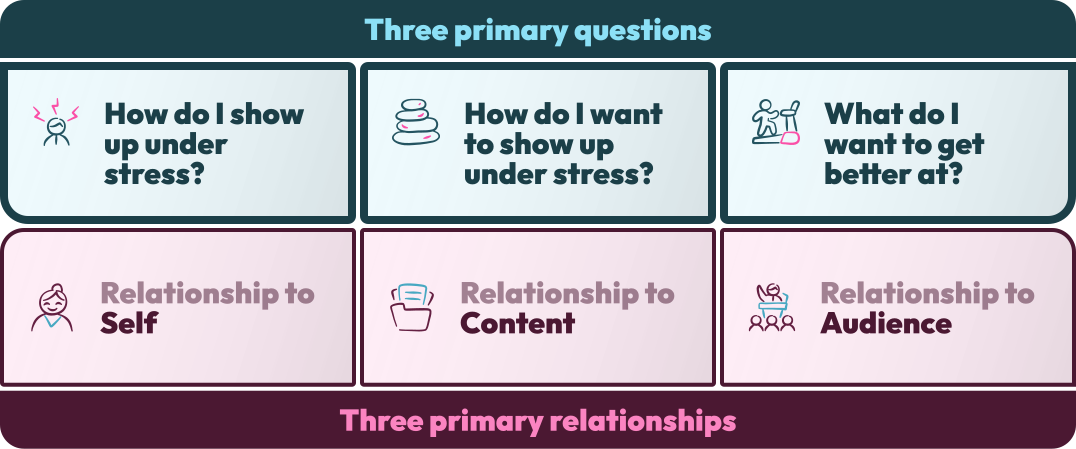
The Six-Box Model™
How we structure practice and measure growth.
Three questions applied to three relationships. A methodology for seeing how you show up under stress, deciding if that's working, and practicing something different until it sticks.
News from the lab
Company updates: new podcast releases, website news, app launches, and FDP graduates.




Questions we hear
Yes. PDFs, videos, podcast episodes—all free. Part of our open source mission. Practice opportunities and knowledge should be available to everyone. Feel free to share these Connection Lab resources on social media with your community. They may help others understand the experience and amplify the mission of human engagement.
The Lab Pass is a secure web app designed to keep your human engagement practice going between workshops. Stay connected to your cohort, check in with the growing Connection Lab community, and practice the Six Box framework with the people who get it. Fun, simple, and built for real development. Check out the overview - the Lab Pass access is included with your first workshop. →
The six-box model is a combination of three ontological questions used on three primary relationships. We use the questions as lenses to look through and observe the relationships under different conditions. It is the aperture that we step through to do all of our coaching at Connection Lab. It is a tool for self-coaching, group coaching, and enterprise development.
Simply start by reading the six boxes out loud. Notice which questions and relationships might stand out to you. Notice if, during any of that process, you find yourself diving deeper into a specific experience or feeling. If you start judging yourself or find yourself leaning into some kind of corrective behavior - use the phrase "isn't that interesting?" This process is not about judgment or correction, and using that phrase helps us notice how we are showing up under stress without either. Using the six box is a practice focused on language that helps us both notice and choose how we show up and what we want to get better at.
Ontological coaching is a holistic methodology that works at the level of worldview — shifting the core language, emotions, and physical presence that shape how we show up in every relationship and conversation.
Unlike conventional coaching, it doesn't just address surface problems. It transforms how we perceive ourselves and others, creating new possibilities for action in the moments that matter most: the high-stakes presentation, the difficult team conversation, the leadership challenge that reveals who we really are under pressure.
The result is sustainable change across the full spectrum of personal and professional development — from communication skills and public speaking confidence to team dynamics, civil discourse, and conflict resolution — and the kind of self-awareness that makes genuine leadership possible.
We go beyond diagnosing what's broken. We expand what's possible. Learn more→
Connection Lab coaching combines the 6 Box Methodology with ontological coaching to help executives and managers work through the challenges they’re facing and reach their professional goals. Each 60-minute Zoom session gives you a focused space to grow, both in your leadership and in your daily engagement practice.
Coaching is flexible. Programs typically run 3 to 12 months, with weekly, biweekly or monthly sessions. They can be part of a leadership development program or focus on a specific business challenge, such as preparing for a keynote, navigating change, managing conflict or improving communication.
After the workshop, you will likely feel a glow of energy from the experience. In service of keeping that warmth alive, you'll be invited to join your cohort in what we call the Lab Pass — our practice web app designed to support your ongoing development of human engagement. Use it to stay connected to your team and practice the tools and language of the Six Box Model. Shared practice is proven to be more effective than going it alone — and your cohort will support you every step of the way.
The Connection Lab podcast - Lab Notes with Russell Hamilton - is a collection of conversations with amazing people who have experienced our workshops and coaching programs — sharing what changed and what they're still trying to get better at. Our guests come from all corners of the marketplace, at every level of experience, modeling real transparency. Listen on your favorite podcast platform - Listen on your favorite podcast platform - podcast.connectionlaboratory.com
Please do. The brochure, the module overview, the podcast—share whatever's useful. If something resonates with your team, that's exactly what it's for. And if you want to go deeper, Enterprise Programs are built for intact teams.
Apple Podcasts, Spotify, or wherever you get your podcasts. Search "Connection Lab" or go straight to podcast.connectionlaboratory.com.